翻译记忆库:定义、原理及其对 AI 本地化的重要性
翻译记忆库用于存储团队已审核通过的译文。我们需要理清的是:当翻译主体变为大语言模型(LLM)时,翻译记忆库(TM)的内涵发生了怎样的变化?市面上的工具是如何实现记忆(或遗忘)的?以及我们在 Transept 的核心抉择:将记忆视为决策的上下文。

本页内容
如果你的团队负责翻译产品内容、技术支持文章、文档资料、营销文案或软件字符串,你一定经常遇到同一个难题:
- 同样的短语反复出现,
- 但每一次都要重新翻译、审校和核准,极其耗时。
这正是翻译记忆库旨在解决的问题。
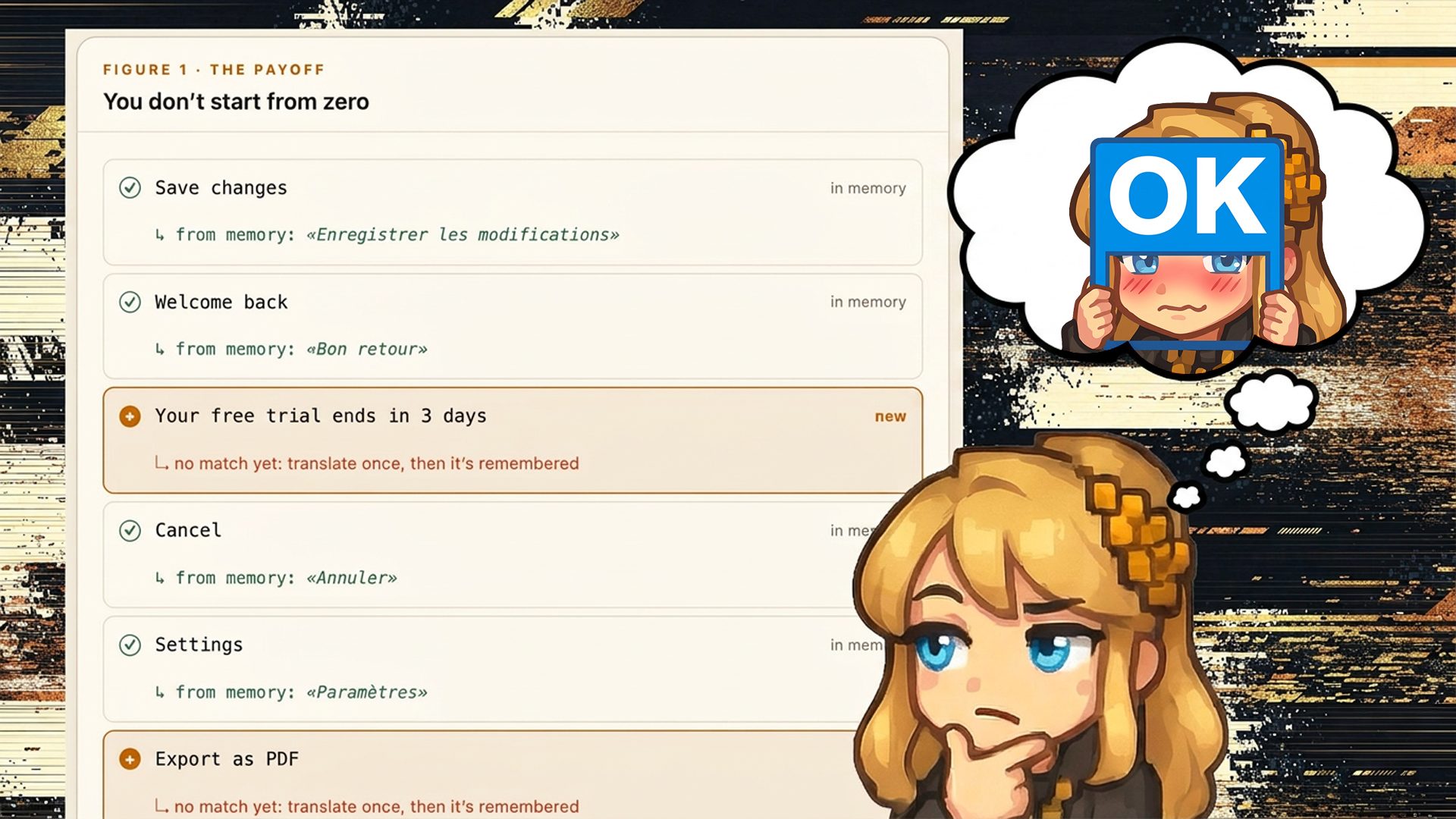
翻译记忆库(简称 TM)是翻译系统中用于存放团队已审核译文的地方。它将原文与最终译文成对保存,这样下次遇到相似的内容时,你就不必再从零开始了。
传统的翻译工具曾利用它来节省时间。而在 AI 时代,它的作用愈发关键:它能向模型展示您的翻译标准,明确预期的翻译决策。其成效极其显著:
- 交付更迅速(无需重复翻译样板内容、免责声明或重复的 UI 文本)
- 成本更低,不仅是因为可以复用既有译文。通过充分的 TM 引导,Transept 团队成功让成本仅为四分之一的模型达到了旗舰级模型的水平
- 风格更一致(几年前确定的翻译决策,在每个新功能中都能得到沿用)。

但在 AI 翻译中,该如何应用翻译记忆库?
- 术语库和风格指南是否也属于翻译记忆库?又该如何确保它们实时更新?
- 如何界定哪些内容才算相关的翻译记忆库片段?
- AI 需要多少上下文?多少算不足,多少又算过剩?
- 如何确保客户的版权及敏感信息绝不会泄露给其他客户?
这正是我们在 Transept 必须弄清楚的问题。当翻译主体不再仅仅是人类时,翻译记忆库究竟意味着什么?我们又该如何让翻译人员与记忆库的协作变得有意义,而不是让他们整天处理一堆毫无营养的低质内容?
正是这个问题,让我们开启了一场深度的探索。
AI 翻译中的翻译记忆库究竟是什么?
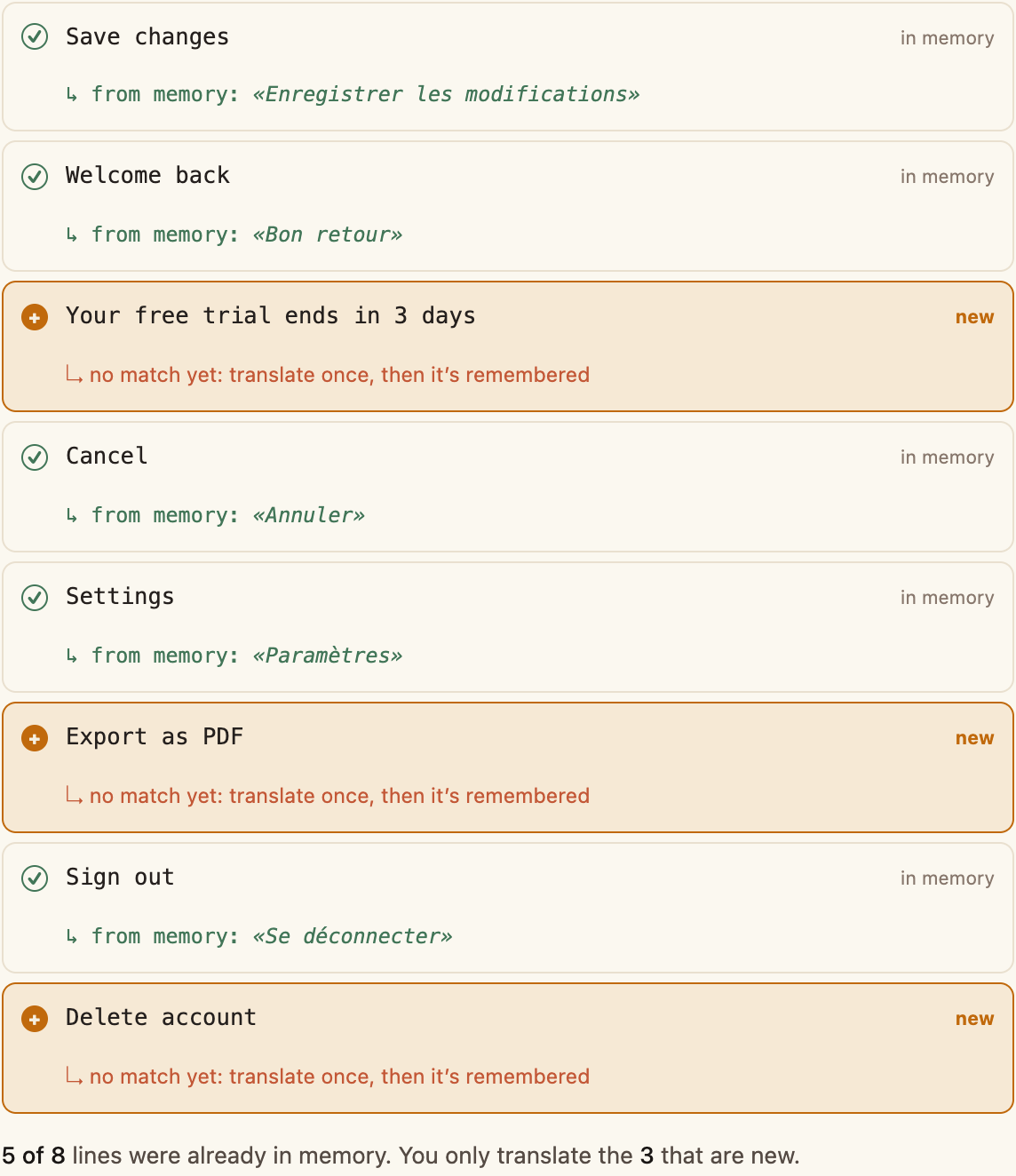
传统上,翻译记忆库是一个由已翻译文本对构成的结构化数据库。每一对通常包含:
- 源片段(原文)。
- 目标片段(译文)。
- 元数据——译者、审核时间、上下文背景。
当翻译人员打开新文档时,TM 软件会扫描文本并与数据库进行比对;一旦发现匹配项,便会推荐之前的译文。
这是传统的 CAT 定义。一旦使用大语言模型和代理式翻译系统,还会涉及其他几种产物:
- 随翻译进度动态生成的术语库,用于确保 AI 术语使用的一致性。
- AI 代理在相互交接工作时生成的交接笔记和摘要。
- 代理在翻译、编辑和校对过程中产生的思考轨迹——即每个决策背后的逻辑依据。
- 代理与人类之间的讨论背景:包括聊天记录、回复串、搜索历史以及 Slack 或 Teams 中的上下文信息。
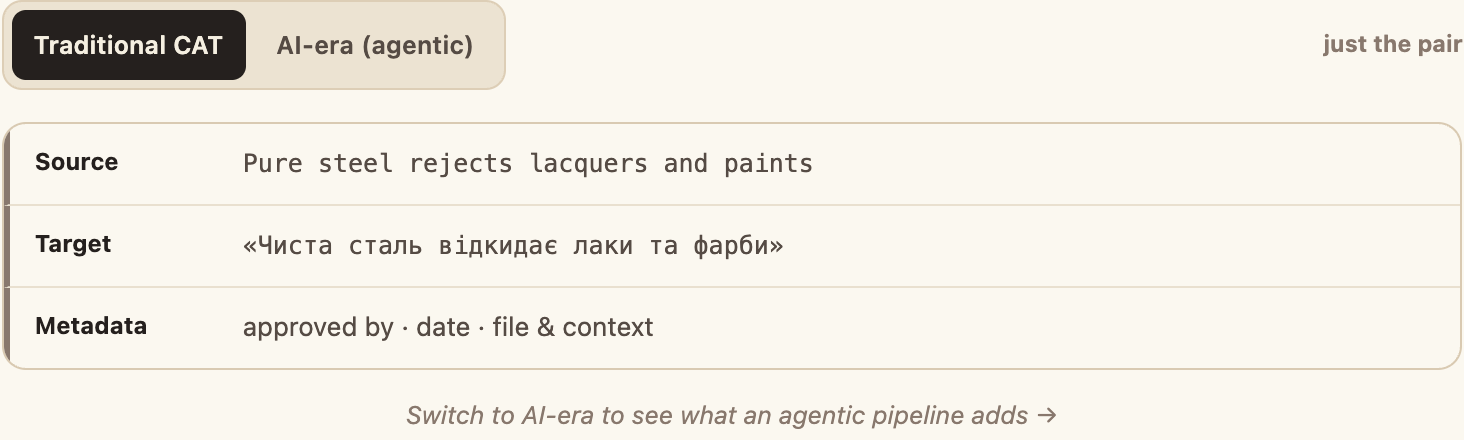


这些信息对人类依然有用,但对 AI 来说却至关重要。它让模型能够重构出人类译者在文档、大脑和对话中承载的上下文。讽刺的是,大语言模型驱动的翻译比人类更需要 TM 和 CAT 工具——毕竟,人类只需纸、笔和字典就能顺利完成翻译。
翻译记忆库匹配的工作原理
TM 软件将内容拆分为较小的单位,称为句段——通常是一个句子、一个标题或一个按钮标签。接着,它会寻找匹配项。TM 如何搜索匹配项是整个领域中最重要的课题。
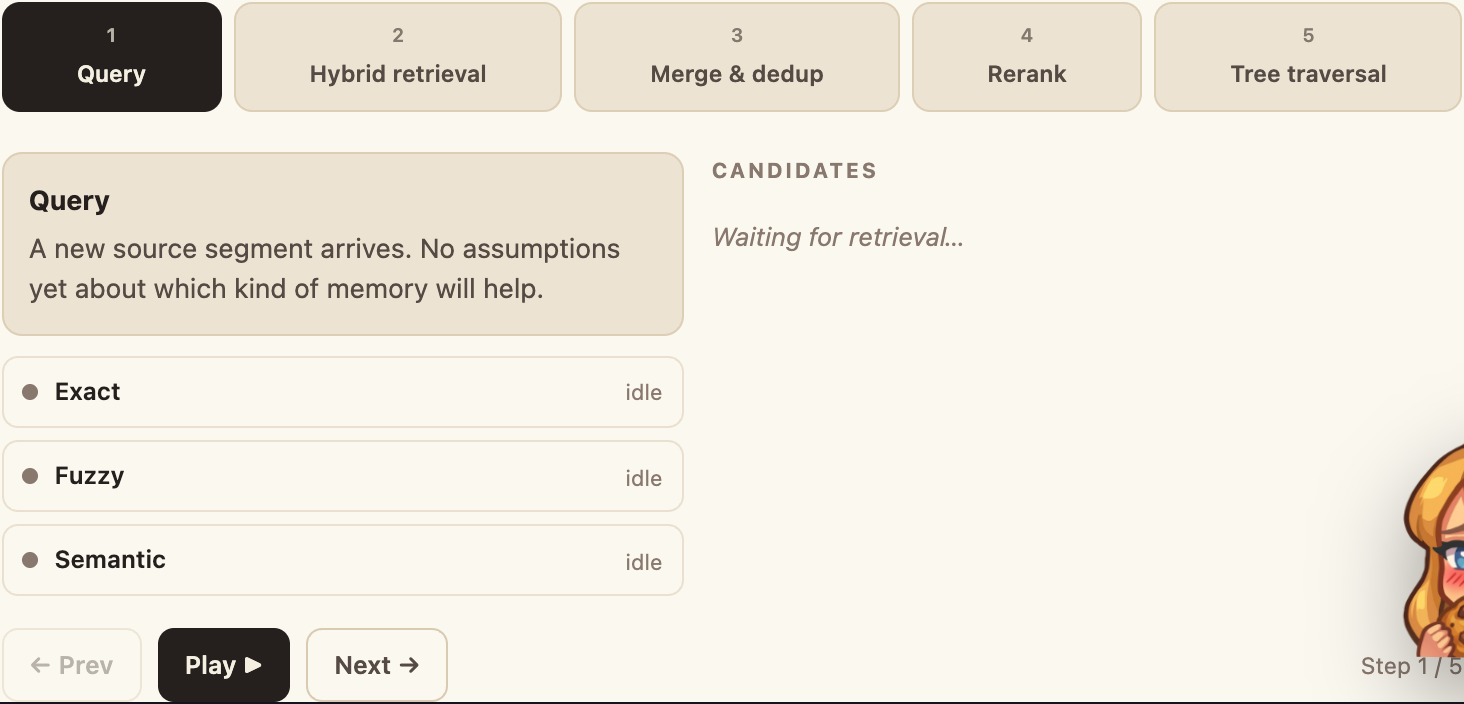
- 完全匹配:新句段与数据库中的某个句段 100% 相同。软件可以自动填充译文。
- 模糊匹配:相似但不完全相同。软件会将其标记出来,供人工审核、更新或参考。这通常由“稀疏搜索”驱动——搜索句子中的每个单词或词干,然后根据数据库句段中包含相同单词的数量进行评分。
- 语义匹配:即使没有任何单词重叠,数据库中的某个句段也具有相似的含义。这使用的是稠密搜索——即向量嵌入和检索,也就是常见的 RAG(检索增强生成)玩法。
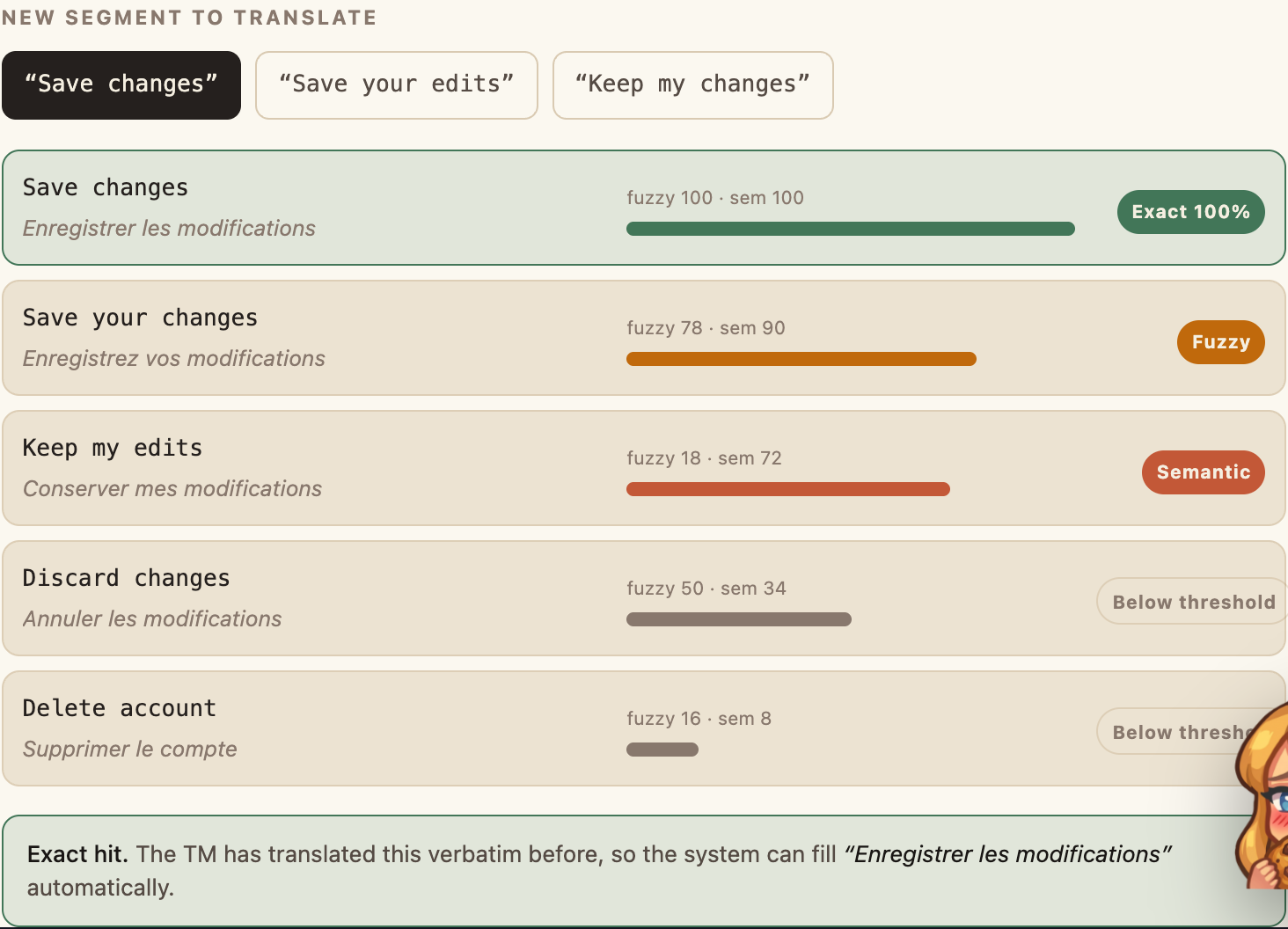
传统的翻译记忆库依赖于精确匹配和模糊匹配。大语言模型带来了语义层。但仅靠语义搜索还不足以实现良好的性能。
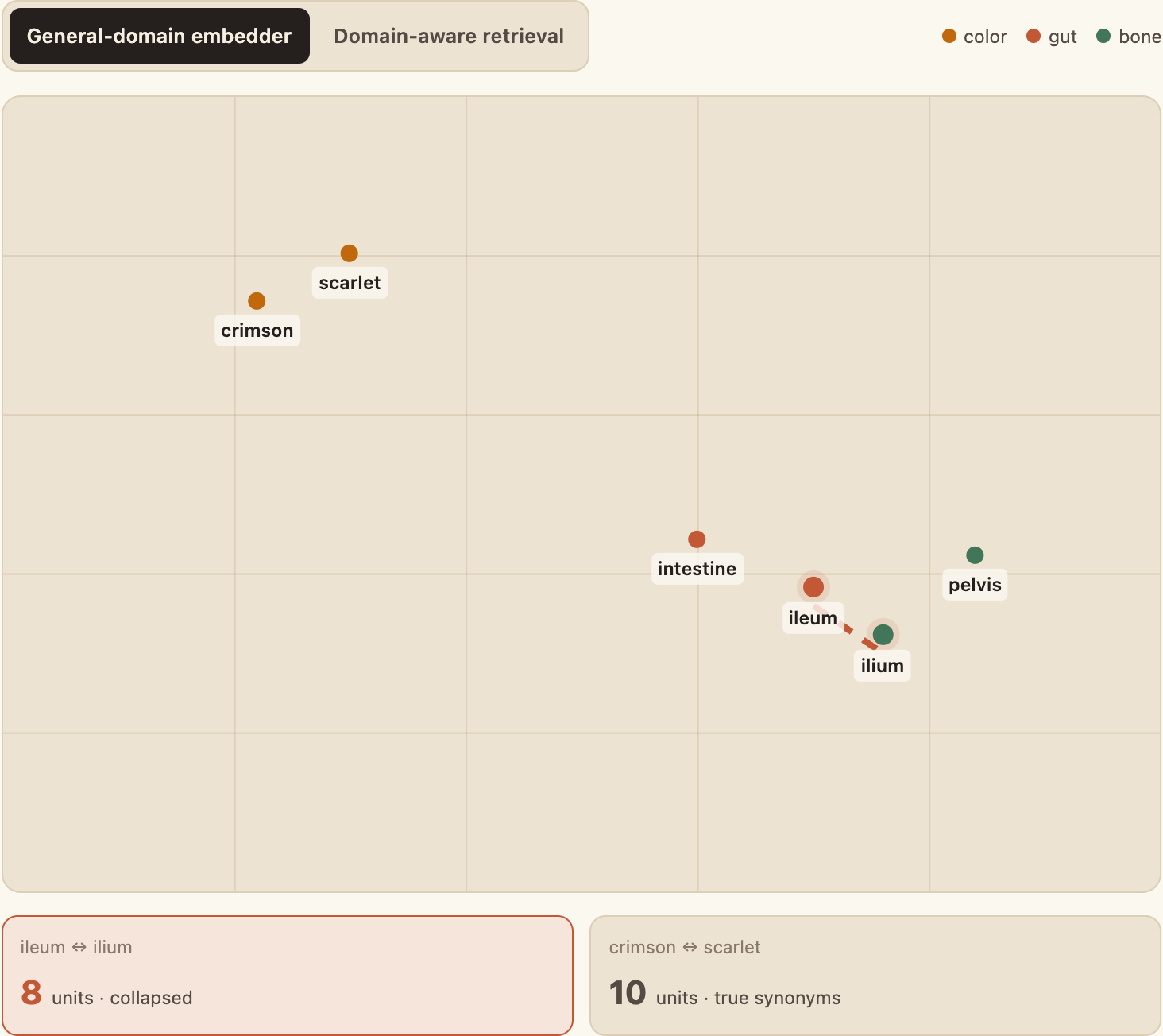
在文学翻译中,模糊术语匹配对于保持专有名词和背景设定的一致性至关重要。在医疗领域,同一事物可以有多种表述方式,语义搜索本应有所帮助——结果却适得其反。对于通用领域的嵌入器来说,回肠(ileum)与髂骨(ilium)之间的差异,就像深红(crimson)与鲜红(scarlet)之间的距离一样微小。
(回肠是小肠的末端;髂骨是髋骨上部较大的部分。这两个词完全不相关,但在通用领域的语义空间中,它们都被归结为“医疗相关内容”。)
因此,护栏机制必不可少。到 2026 年,翻译记忆库的默认配置将包括:
- 混合搜索:整合精确匹配、模糊匹配和语义匹配,从过往翻译历史中筛选出最相关的结果。
- 重排序:根据实际上下文对候选译文的相关性进行重新评分。
- 树遍历:人工或智能体可以从某个匹配项跳转到其最近邻,从而对数据库进行深入探索。
市场上其他工具如何处理翻译记忆库
任何专业的本地化工具都能存储过往的翻译并再次推荐。而真正核心的问题是:系统记住了什么?何时信任这些记忆?以及随后在何处使用这些记忆?
从这个角度看,市场可以划分为三个层级:记忆即复用、记忆即治理、以及记忆即 AI 燃料。Transept 则押注于第四个层级:记忆即决策上下文。
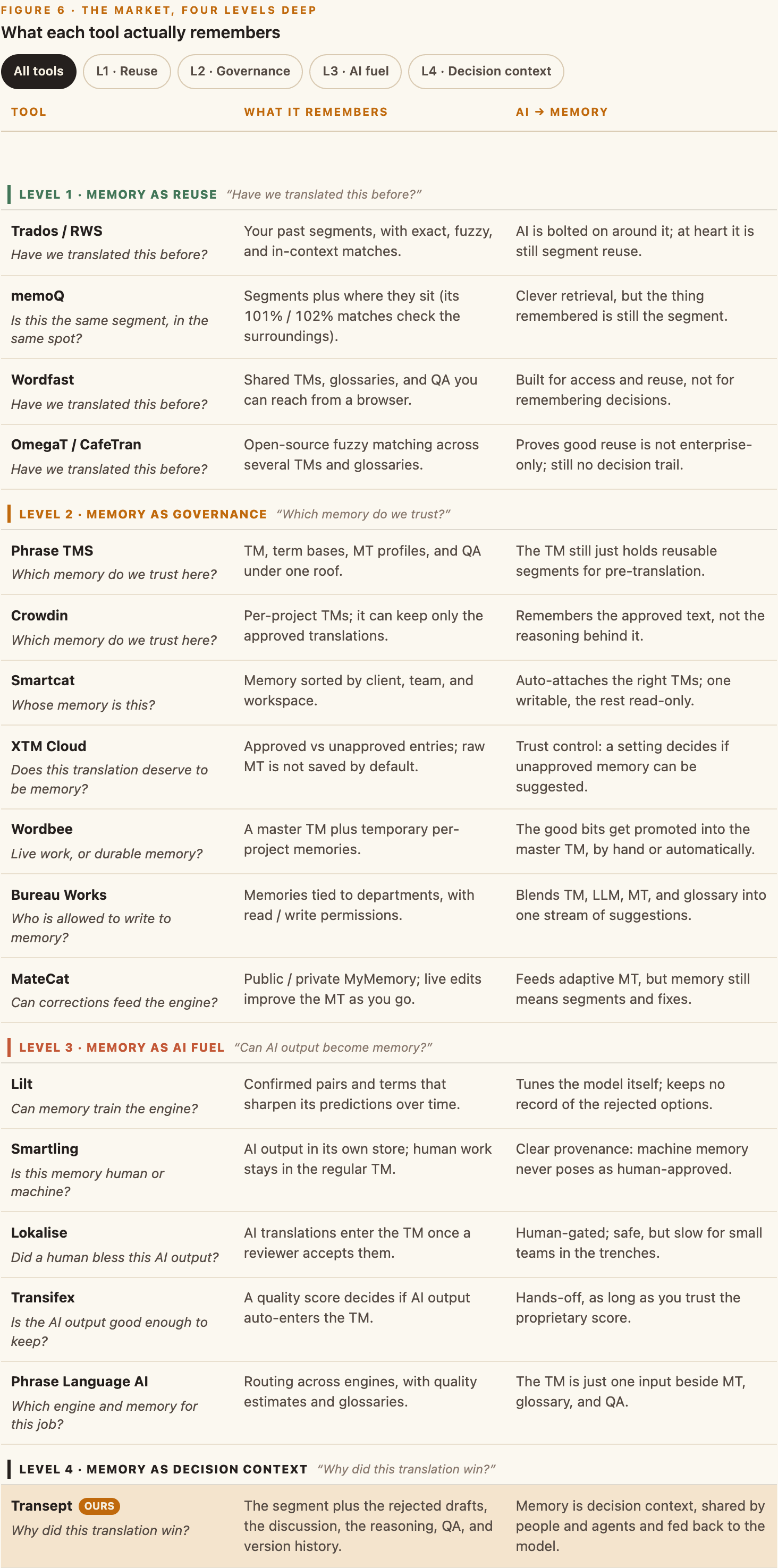
| 工具 | 记忆内容 | AI → 记忆 |
|---|---|---|
级别 1 · 记忆即复用“这句话以前翻译过吗?” | ||
Trados / RWS 这句话以前翻译过吗? | 过往句段,包含完全匹配、模糊匹配和上下文匹配。 | AI 只是外挂其上的插件;其核心本质依然是句段复用。 |
memoQ 这是同一个句段,且位于同一个位置吗? | 句段及其所处位置(其 101% / 102% 匹配会校验上下文环境)。 | 检索方式固然巧妙,但记忆的内容依然只是句段。 |
Wordfast 这句话以前翻译过吗? | 可以通过浏览器访问的共享翻译记忆库、术语库和 QA。 | 专为访问和复用而设计,而非记录决策。 |
OmegaT / CafeTran 这句话以前翻译过吗? | 支持跨多个翻译记忆库和术语库的开源模糊匹配。 | 证明了优秀的复用并非企业级工具的专利;但依然缺乏决策轨迹。 |
级别 2 · 记忆即治理“我们该信任哪项记忆?” | ||
Phrase TMS 在这里,我们该信任哪项记忆? | 将翻译记忆库、术语库、机器翻译配置和 QA 集于一体。 | 翻译记忆库依然只是存储用于预翻译的可复用句段。 |
Crowdin 我们该信任哪种记忆? | 项目级翻译记忆库;仅保留已批准的译文。 | 记录已批准的文本,而非其背后的决策依据。 |
Smartcat 这是谁的记忆? | 按客户、团队和工作区分类的记忆 | 自动挂载匹配的翻译记忆库;一个可写,其余只读。 |
XTM Cloud 这样的译文,值得成为“记忆”吗? | 区分已批准与未批准的条目;默认不保存原始机器翻译。 | 信任控制:自主设定是否推荐未批准的记忆。 |
Wordbee 实时作业,还是持久记忆? | 主翻译记忆库及各项目临时记忆。 | 优质内容可通过手动或自动方式提升至主翻译记忆库。 |
Bureau Works 谁有权写入记忆? | 记忆关联部门,读写权限精准掌控。 | 将 TM、LLM、MT 和术语库整合为统一的建议流。 |
MateCat 修正能否反哺引擎? | 公共/私有 MyMemory;实时编辑,机器翻译随改随优。 | 反馈给自适应机器翻译,但记忆的本质依然是句段和修正。 |
级别 3 · 记忆即 AI 燃料“AI 输出能转化为记忆吗?” | ||
Lilt 记忆库能训练引擎吗? | 经确认的译文对和术语,随时间推移让预测更精准。 | 调整模型本身;不保留被舍弃选项的记录。 |
Smartling 这项记忆是人工生成的,还是机器生成的? | AI 输出存储在独立的库中;人工译文则保留在常规翻译记忆库中。 | 溯源清晰:机器记忆绝不冒充人工审核译文。 |
Lokalise 这项 AI 输出经过人工审核了吗? | AI 译文经审核员批准后即进入 TM。 | 人工把关;安全可靠,但对奋战一线的小团队而言,进度较慢。 |
Transifex AI 输出的质量是否足以保留? | 通过质量评分决定 AI 输出是否自动进入 TM。 | 只要信任专有评分,即可解放双手。 |
Phrase Language AI 这项任务该选用哪个引擎和记忆库? | 支持跨引擎路由,并结合质量预估和术语库。 | TM 只是与 MT、术语库和 QA 并列的输入项之一。 |
级别 4 · 记忆即决策上下文“为什么这个译文会胜出?” | ||
Transept我们的 为什么这项译文会胜出? | 除了句段本身,还包括被舍弃的草稿、讨论记录、决策依据、QA 以及版本历史。 | 记忆即决策背景,由人工与智能体共享,并反馈给模型。 |
第 1 级:记忆即复用
传统的 CAT 工具回答了翻译记忆库最古老的问题:“这段话我们以前翻译过吗?”
它们并不简陋——许多工具都支持上下文感知匹配、片段召回、机器翻译插件、团队服务器以及强大的编辑器工作流。但记忆库大多只是在编辑器旁充当建议来源。它能帮译者复用旧作,却通常无法记录当初为何在不同译法中做出特定选择。
- Trados / RWS 是 CAT 工具的经典基准——擅长完全匹配、模糊匹配、一致性搜索以及上下文完全匹配,且如今更广泛的 Trados 生态系统已融入了 AI 和 Language Weaver 工作流。但从 TM 层面来看,其核心理念依然是在 CAT 环境下的句段复用。
- memoQ 在上下文处理方面将传统的 TM 发挥到了极致。其 101% 和 102% 匹配功能会判定同一句段是否出现在相同位置——这对于软件字符串、重复标签和结构化文件至关重要。检索固然智能,但系统记住的对象本质上仍是语境中的句段。
- Wordfast 保持了 TM 的便携与实用。Wordfast Anywhere 为译者提供基于浏览器的共享 TM、术语库、QA 和机器翻译。其价值在于便捷性与复用,而非对决策过程的深层记忆。
- OmegaT 和 CafeTran 证明了专业级的复用并非企业级软件的专有功能——它们提供免费开源的模糊匹配、匹配传播、多重翻译记忆库和术语库支持,并为高级用户配备了面向团队的翻译记忆库服务器。
因此,行业门槛已经很高了。即便是低成本和独立开发的工具,在记忆与复用翻译方面也表现出色。真正的商业竞争,在于如何超越单纯的复用。
第 2 级:记忆即治理
接下来的一组工具提出了一个不同的问题:“针对特定的客户、团队、项目或工作流,哪些记忆内容是值得信赖的?”
- Phrase TMS 将记忆库视为大型平台中的一种受控资源——涵盖了 TM、术语库、机器翻译引擎配置、Phrase Language AI、质量评分及 QA。虽然覆盖面广,但 TM 本身主要存储的依然是可复用的句段。
- Crowdin 在项目层面提升了记忆库的实用性:自动创建项目 TM、可选仅存储已审核的译文,并区分了普通的 100% 匹配与“完美匹配”(文本与上下文均一致)。它能预填充字符串,但记住的仍是审核通过的文本,而非背后的决策逻辑。
- Smartcat 围绕协作关系(客户、部门、工作区、AI 翻译配置)来组织记忆库,能自动关联相关的记忆库和术语库,并支持设置一个可写 TM 及多个只读 TM。其优势在于自动路由与权属管理。
- XTM Cloud 将记忆库视为需要状态管理与保护的资源:条目可标记为已审核或未审核,原始机器翻译不会被自动保存,带有修订记录的句段在被接受或拒绝前处于待定状态,且可以通过设置决定是否推荐未审核的记忆内容。其核心在于对信任机制的管控。
- Wordbee 将持久化翻译记忆库与临时项目记忆库区分开来。项目记忆库会捕获实时工作内容,并在翻译过程中即时提供句段建议;随后,有价值的部分会被整合进主记忆库。这种方式贴近实时文档语境,但本质上仍是句段存储。
- Bureau Works 侧重于管控——记忆库与部门关联,并设有读写权限(普通译者可以使用,但只有语言负责人可添加条目),且提供一个融合了 TM、大语言模型 (LLM)、传统机器翻译和术语库的统一推荐流。其功能强大,偶尔令人应接不暇,且最终判定仍取决于审阅建议的人员。
- MateCat 是一款接入了 MyMemory (TM) 和 ModernMT (MT) 的 Web CAT 编辑器。公有和私有记忆库共同驱动机器翻译建议,译者的实时更正也会在工作过程中不断优化输出——这更接近于“TM 驱动的自适应机器翻译”,而非简单的“TM 与机器翻译并行”。即便如此,这里的记忆库指的依然是句段、匹配项和更正记录。
第 3 级:记忆即 AI 燃料
最新的一组工具探讨的是,当 AI 生成、编辑或从翻译中学习时会发生什么。机器输出的内容能否转化为记忆?是否需要先经过审阅?质量评分能否取代人工审核?TM 能否直接驱动引擎本身?
- Lilt 将 TM 视为自适应机器翻译的燃料——已确认的翻译单元和术语库数据能随时间推移不断优化预测性建议。其核心在于引擎内部的自适应预测,而非涵盖评论、被否决的备选方案以及审阅逻辑的更广泛记忆。
- Smartling 明确了译文的出处:AI 输出的内容可以存入独立的“机器生成翻译记忆库”,而人工翻译或经人工验证的内容则保留在常规 TM 中。这是一种强大的信任模型——AI 输出内容可供复用,但绝不会在未经声明的情况下冒充人工审核的结果。
- Lokalise 将审阅视为信任关口:当审阅者在“审阅任务”中接受 AI 或机器翻译的内容时,即使未对文本进行任何修改,这些内容也可以进入 TM。AI 输出可以转化为持久记忆,但必须经过人工环节——这增加了操作阻力,对于那些决策发生在实战一线、需要立即记录下来的小型团队来说,并非理想选择。
- Transifex 使用 TQI 作为自动化关口。通常情况下,生成的译文未经审阅不会进入 TM,但 Transifex AI 可以利用其“翻译质量指数 (TQI)”为译文打分,一旦分值超过预设阈值,译文即可自动添加。问题在于:你必须信任这套私有的评分指标。
- Phrase Language AI 充当了编排层——它在不同引擎和智能代理工作流之间调度任务,利用质量预估、应用术语库、管理机器翻译配置,并支持自带引擎。其系统设计非常出色,但 TM 在其中依然只是与机器翻译、术语库、QA 和路由并列的输入项之一。
我们发现的市场空白
在所有这些工具中,市场在存储最终译文、区分人工与机器输出、调用合适的记忆库以及判定 AI 输出何时可复用方面已日趋成熟。我们将这一切都视为默认的基础配置。
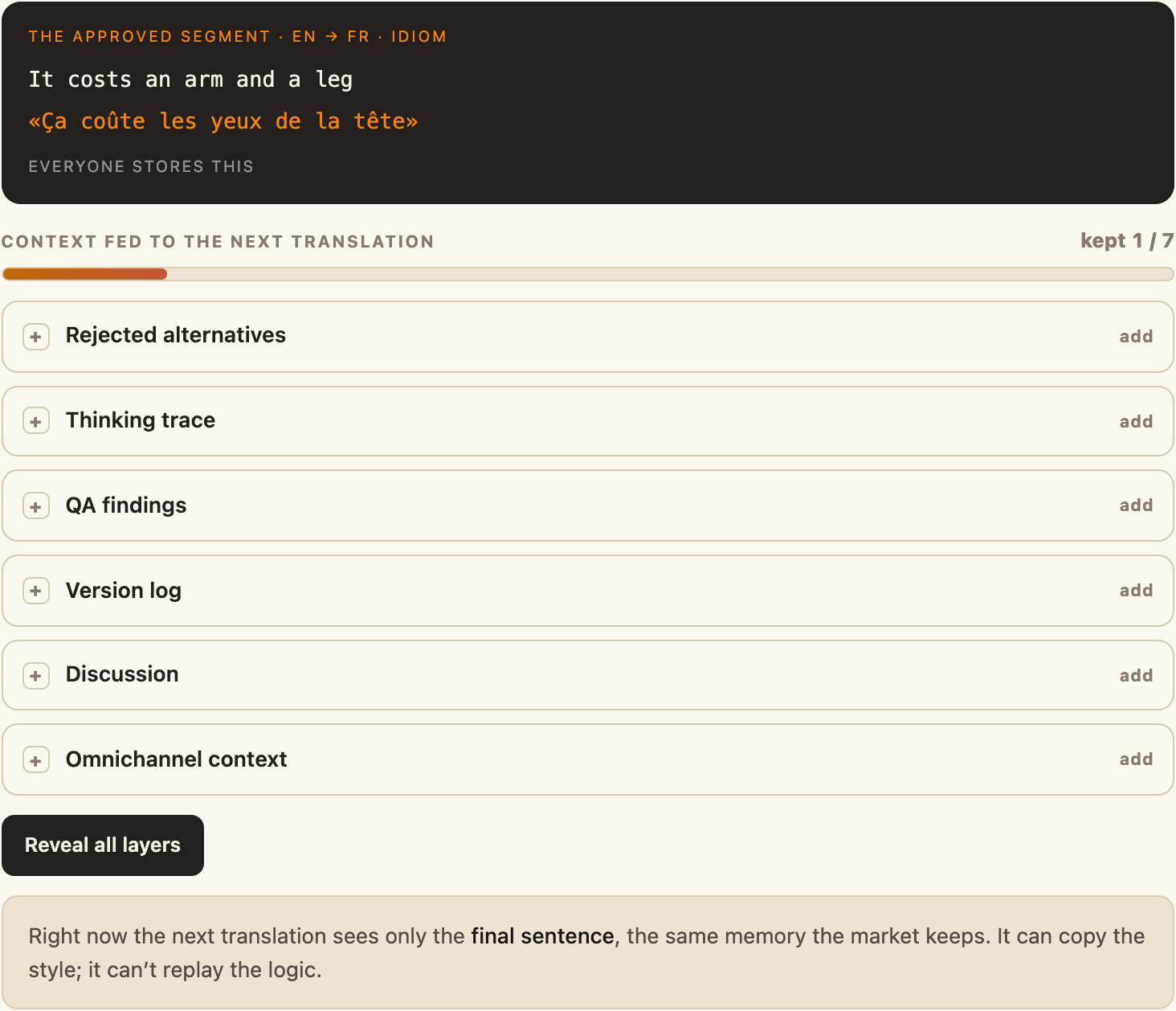
仍然罕见的是对翻译周边工作的记忆。很少有工具会保留被否决的备选方案、评论、审阅历史、搜索上下文、审批逻辑,以及解释为何某个版本最终胜出的决策路径。翻译过程自然会产生这些“工程金矿”,但几乎没有人费心去挖掘它们。
更为罕见的是将这些历史记录反馈给性能强大的大语言模型,使下一次翻译能够利用其推理逻辑,而不仅仅是参考最终输出。
这正是我们在 Transept 押下的赌注。无论句子本身多么重要,翻译记忆库都不应只记住句子。它应该记住那些让句子变得可靠的工作。TM 必须成为人类和 AI 共同享有的决策上下文。
Transept 如何实现翻译记忆库
在 Transept,我们致力于为大语言模型所能达到的翻译质量树立行业标杆。
回想起我们还是缺乏资金的独立作者和译者时,AI 是我们唯一能触及的方案。大语言模型若没有人类的参与,就无法发挥其全部潜力——而这种参与正是世界上最宝贵的资源:即某个人生命中的时光。因此,我们没有将记忆库视为一个被动的数据库,而是将其打造为工作流中一个活跃的参与者。它在不断汲取,也在不断回馈。
混合搜索与细粒度过滤
Transept 的翻译记忆库采用模糊匹配与向量检索相结合的混合搜索模式,兼具速度与准确性。但检索只是成功的一半,另一半在于对检索内容的精准控制。
您可以精确筛选进入记忆库的内容:既可以调用整个组织的资源库,也可以缩小范围至某个团队的作品集,或是仅限于单个项目。默认情况下,系统仅包含通过 TMS 状态标记的已人工审核文档,但您可以在团队、文档或项目层级灵活调整这些规则。
无论是人类译者还是 AI 智能体,都能查看到最相关的历史翻译记录——包括曾被否决的备选方案以及最终决策背后的讨论过程。您看到的不仅是最终选定的译文,更是其背后的考量。
梯度翻译记忆库锚定
针对自动化 AI 工作流,我们构建了所谓的“梯度翻译记忆库锚定”技术,旨在提升大语言模型的表现:
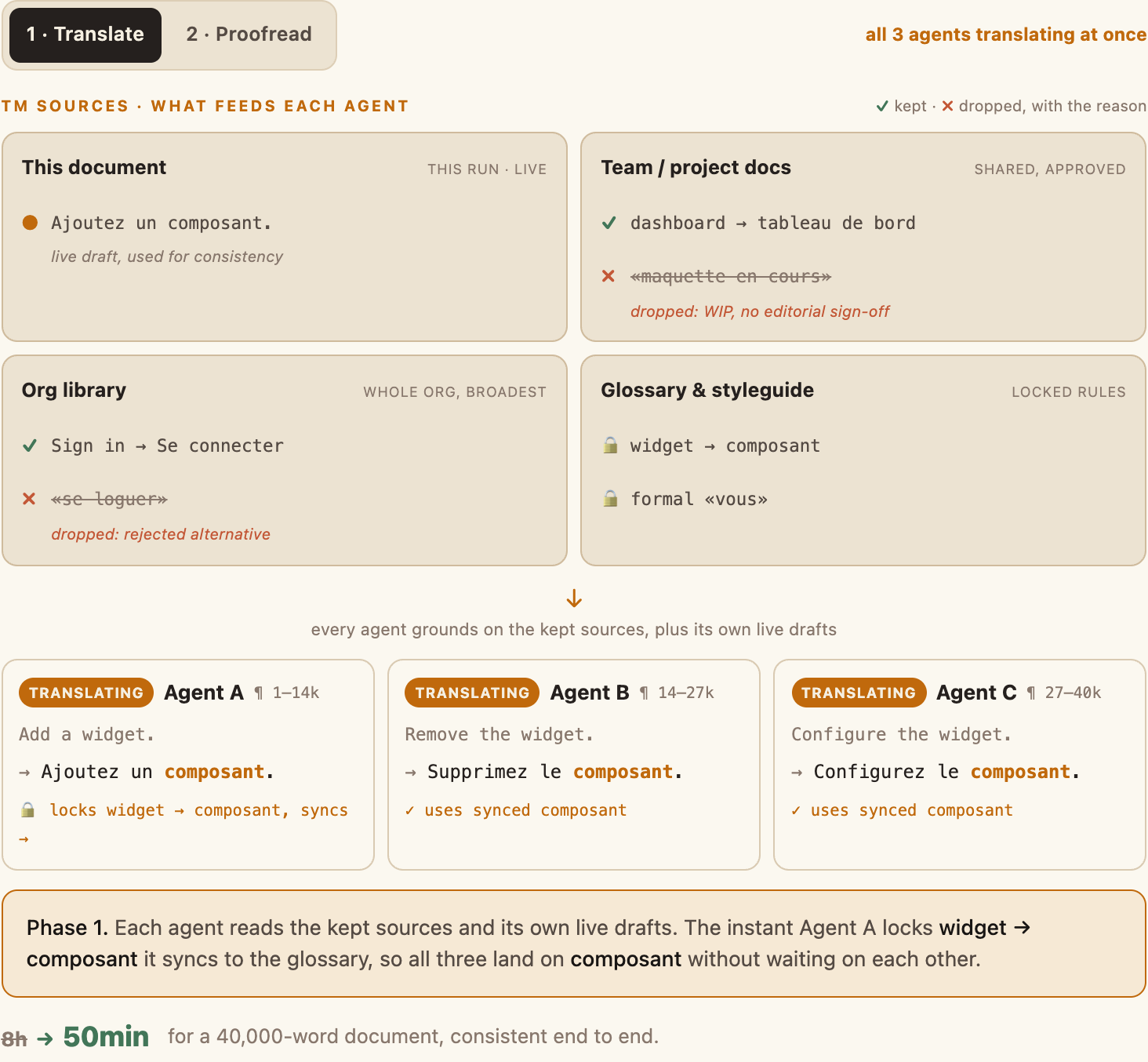
- 实时文档同步:在翻译过程中,AI 不仅会读取已审核的翻译记忆库来源,还会参考同一文档中的前序句段——即便没有严格的术语库或风格指南,也能确保术语、风格和翻译决策的一致性。
- 安全校对:当 AI 进行校对或润色时,同一文档中的句段只有在被 AI 编辑器标记为“已审核”后才会被用作上下文。这能防止模型产生幻觉,或导致之前的错误再次出现。
- 并行智能体同步:当多个智能体同时翻译超长文档时,它们的记忆库会持续同步,从而在全文范围内传递翻译决策。这曾是一个巨大的技术瓶颈——但它将一份 4 万字文档的翻译时间从 8 小时缩短到了 50 分钟。
扩展语境与工作流控制
在掌握了捕捉优秀决策与人类才智的方法后,我们进一步深挖,致力于提供深层语境支持与便捷的工作流:
- 全渠道语境:通过聊天、评论和文档搜索,人类译员和 AI 都能找寻翻译背后的深层背景——包括网页搜索、词典查询、编辑器评论,以及与队友和 Literess 的讨论。
- 可灵活配置的工作流:Transept 的自动化工作流同样能利用翻译记忆库 (TM) 来提升文档质量。我们不强制使用默认设置,而是允许团队针对每个环节自定义记忆库的运作方式。
- 版本方案追溯:通过翻译版本日志,团队可以清楚地查阅在众多 AI 或人工草稿中最终采纳了哪一个——从而让记忆库不仅能模仿风格,更能还原翻译背后的逻辑。
- 校对层中的 Literess:Literess 将记忆库直接引入校对环节。她利用术语库、风格指南、文档语境、前序句段、QA 结果以及翻译历史,对文档进行批注、解释问题、提供修改建议,并协助人工校对员做出最终定夺。
人机功能对等
Transept 核心理念之一便是“功能对等”。考虑到译员的工作流千差万别,我们确保所有工具、记忆层和语境窗口对人类专家和 AI 代理均一视同仁,提供同等支持。
其结果是,记忆层得以主动参与到翻译工作中。系统不再需要人工手动查阅旧文件以确认某个词的译法,而是在起草阶段就将相关语境推送给 AI,在 QA 环节利用这些信息标记错误,并将其呈现给人工校对员。
团队得以从繁琐的一致性检查中解脱出来,重新专注于判断表达是否地道。AI 负责查缺补漏,而 Transept 则会记录下翻译过程中的每一个创意选择或法律层面的决策。

作者
Transept 联合创始人,笔名“Mevkh”。拥有语言文学学位,随后转向软件开发:作为高级 AI 工程师,他为 50,000+ 用户交付了生产级 LLM 功能——包括 RAG、智能体工具和 LLM-as-judge 评估。他也是一位慢工出细活的小说家,抽屉里藏着 120,000 字的讽刺浪漫奇幻小说。正是 AI 翻译与他自身文笔之间的摩擦,促成了这一切的开始。