A tool for the way it actually feels
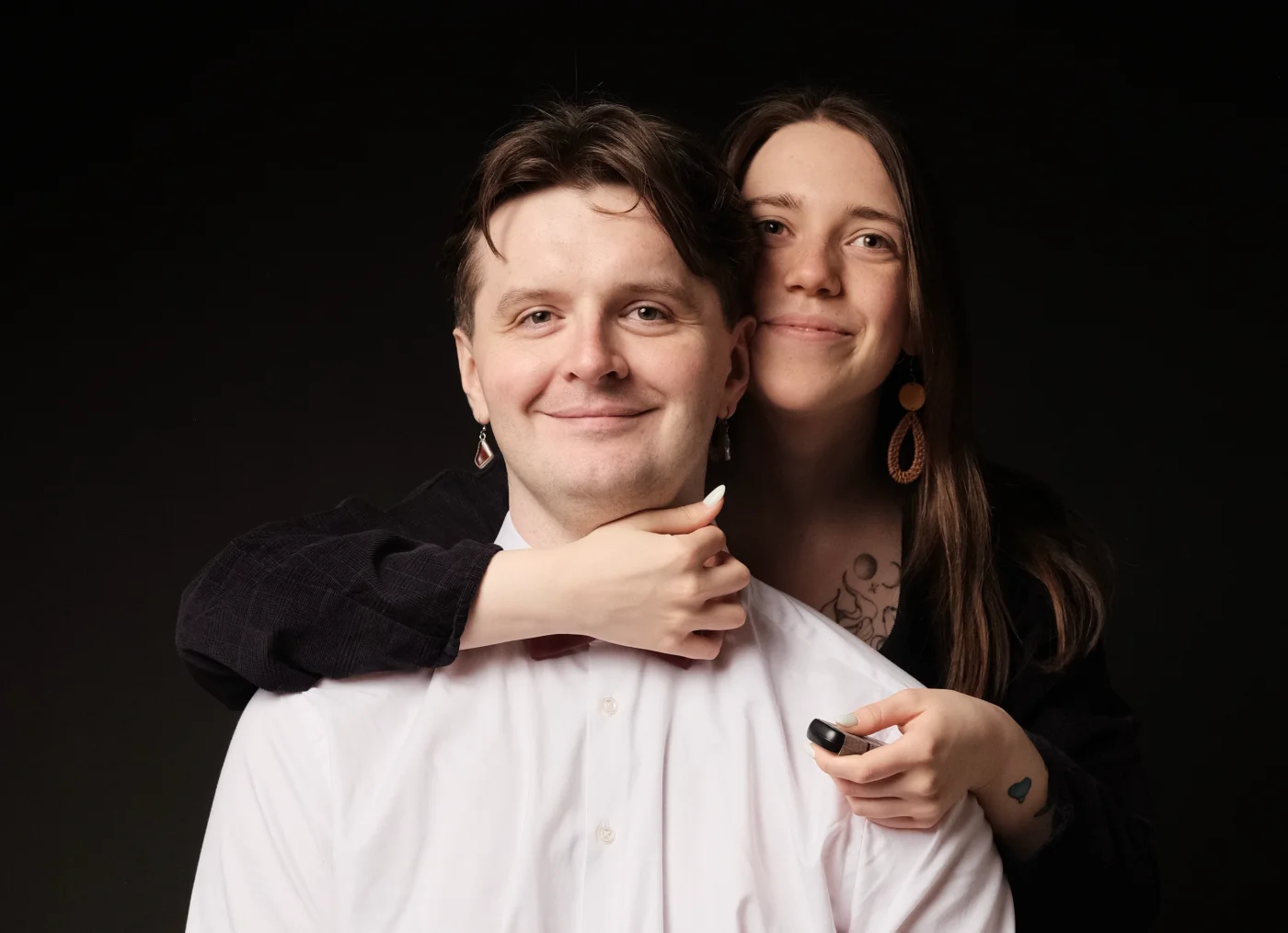
Transept is an AI translation workspace, built in 2025 by Mariia Ivakhnenko and Vitalii Vlasiuk, two literature graduates who looked for a tool that could carry their own writing into another language and didn’t find one. We believe translation should preserve how something feels, not just what it says.
How it started
Two writers, one problem.
— Vitalii.I wrote 120,000 words of satirical romance fantasy: mages drowning in debt, a multiverse economy that makes Wall Street look ethical, and a love story tangled up in all of it.
— Mariia.I write semi-fictional stories about real people, built around how it felt. Most of the people I wrote about were from other countries. We met in English, spoke in English, lived those moments in English. So I wrote them that way too. But I sometimes wonder what version of them I missed by not writing them in their language.
— Vitalii.I hit the same problem from the other side. Every tool I tried preserved the words but killed the voice: tone, rhythm, wit, emotional texture. Nothing held. It all came back flatter than it went in.
— Both of us.So we did what we know how to do. We read the research on machine translation. We benchmarked Claude, GPT, Gemini, and a handful of open models on the same 50-page chapter, judging each on accuracy, tone, and whether the satire still landed. None of them got all three right, and each failed in its own way. Then we built the tool we wished we’d had when we started.
Who built this
We’re Mariia and Vitalii, the co-founders of Transept and its entire team. We met at Litero AI, an AI writing startup, where Mariia ran product and product marketing and Vitalii led AI engineering. We build Transept alongside our day jobs: Mariia builds product features and runs marketing, CRM and communications, and Vitalii builds the AI.
Mariia Ivakhnenko, co-founder
Two degrees in English Language and Literature, studied at three universities: a BA from Taras Shevchenko National University of Kyiv, an MA from the University of Ostrava, and an Erasmus+ exchange at the University of Salzburg. Languages: native Ukrainian, English at full professional proficiency (IELTS 7.0), conversational Czech, and learning German.
CRM and lifecycle marketing manager at Invity, a fintech app, where she runs onboarding, activation, retention and win-back across email, push and in-app messages for over 30,000 users. Before that, she ran email and lifecycle marketing at Snov.io, and at Litero AI she went from prompt engineer (2023) to product manager and product marketing manager. Certified in Anthropic’s Claude Code in Action (Mar 2026). At Transept she builds product features and runs marketing, CRM and communications.
Outside the day job, she writes semi-fictional stories about real people, built around how it felt. Work in progress, unpublished. What gets lost between languages is the question she keeps coming back to.
Vitalii Vlasiuk, co-founder
Bachelor’s in Language and Literature from Kyiv National Linguistics University, then a move into software. Native Ukrainian, English at full professional proficiency, learning German.
Senior machine learning engineer at SumUp, where he builds AI assistants for merchants and owns their evaluation: the benchmark infrastructure, a multi-agent business-intelligence assistant, and OCR document processing for support. Before that, a contract at Deloitte rebuilding the LLM judges behind a real-time healthcare assistant, and three and a half years of AI consulting for startups: LangGraph agents, RAG pipelines and production assistants in fintech and game development. Earlier, a senior AI engineer at Litero AI, shipping LLM features to 50,000 monthly active users. At Transept he is the machine learning and AI engineer behind the translation pipeline.
Also a novelist, in no hurry: 120,000 words of satirical romance fantasy sit in a drawer somewhere. The friction between AI translation tools and his own prose set this whole thing in motion.
Where this is going
Right now, Transept handles documents: upload, translate, edit sentence by sentence, export. But the goal is bigger: a workspace where everything you write can exist in any language without losing what made it yours. Better glossaries that learn from you. Tighter integrations with the tools you already use. And translation quality that keeps getting closer to what a great human translator would do, in minutes instead of weeks.
Say hi
We’re easy to reach. Word travels.